The UNESCO Property Committee has met
The committee in charge of the listed property met in Privas on 2 July 2018 to present the review of the first management plan.
How do you share a cave that nobody can visit? That is the purpose of the Major Project, led in Ardèche by a joint public body, from the Unesco application to the creation of the replica.
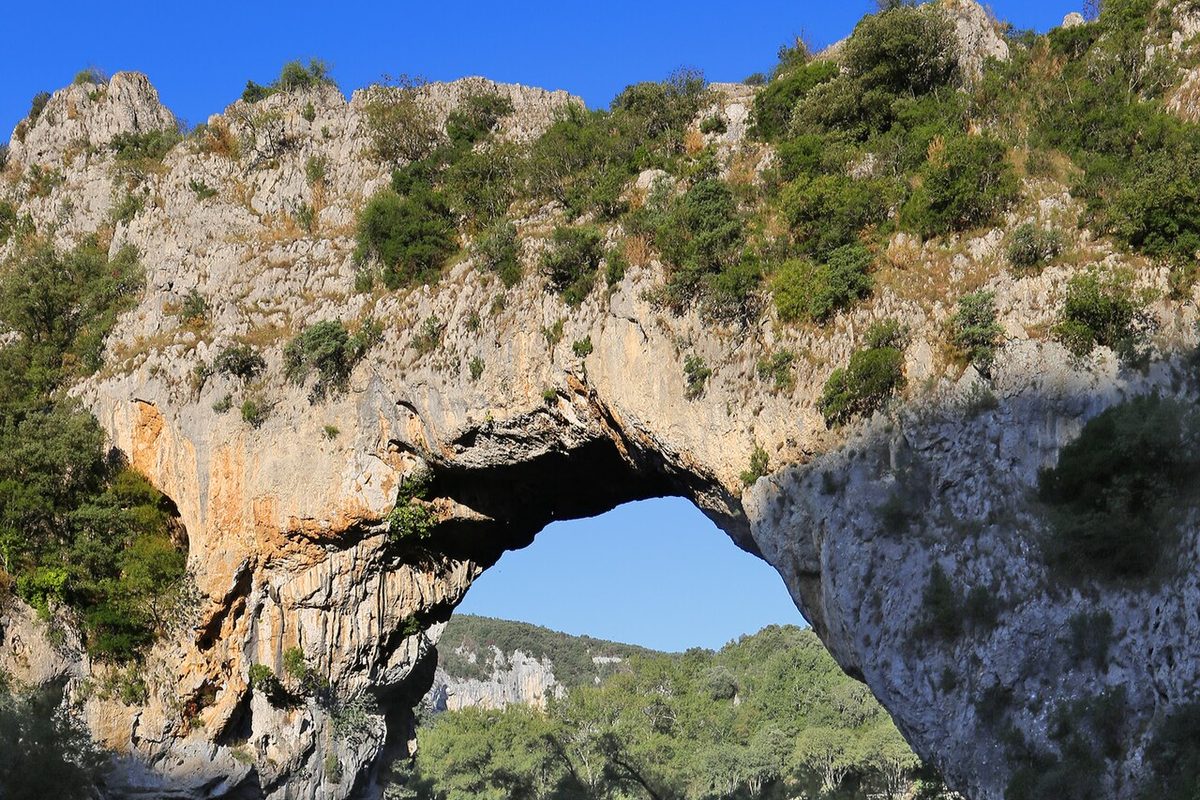
The decorated cave of Pont-d'Arc, known as the Chauvet-Pont-d'Arc cave, lies in Ardèche, in the south of France, in the municipality of Vallon-Pont-d'Arc, above the Ardèche gorges. It was discovered in December 1994.
Its walls bear hundreds of animal figures: lions, rhinoceroses, mammoths, bears, horses, aurochs. Because of their age, their state of preservation and the skill of the drawing, they rank among the oldest known works of art of humankind.
The charcoal drawings were dated using the carbon-14 method. The results place the oldest ones at around 36,000 years.
To protect a very fragile environment, the cave has never been opened to the public. Only a scientific team works there, under strictly controlled conditions.
World Heritage listing recognises the outstanding universal value of a property and commits those in charge to pass it on intact. The decorated cave of Pont-d'Arc has been on the Unesco World Heritage List since June 2014. The application was carried by the local authorities and the French State, with broad public support.
Since the cave cannot be visited, another way of sharing this heritage was needed. The Pont-d'Arc Cavern is a reconstruction of the cave, its volumes, its walls and its drawings, built close to the original site. It was presented as the largest decorated cave replica in the world and opened in 2015.
The reliefs were reproduced from three-dimensional surveys, and the paintings and engravings were redone by hand. The scientific committee of the cave validated each stage of the work.
The Major Project was designed as a driver of development for Ardèche, with the ambition of making the area a leading cultural and heritage destination. It was supported by the Region, the Department, the French State and Europe.
The committee in charge of the listed property met in Privas on 2 July 2018 to present the review of the first management plan.
Many thanks to the 33,000 ambassadors who supported this application.